


ALBUM REVIEW - THE ALL AMERICAN REJECTS – SANDBOX

WORDS RICK E
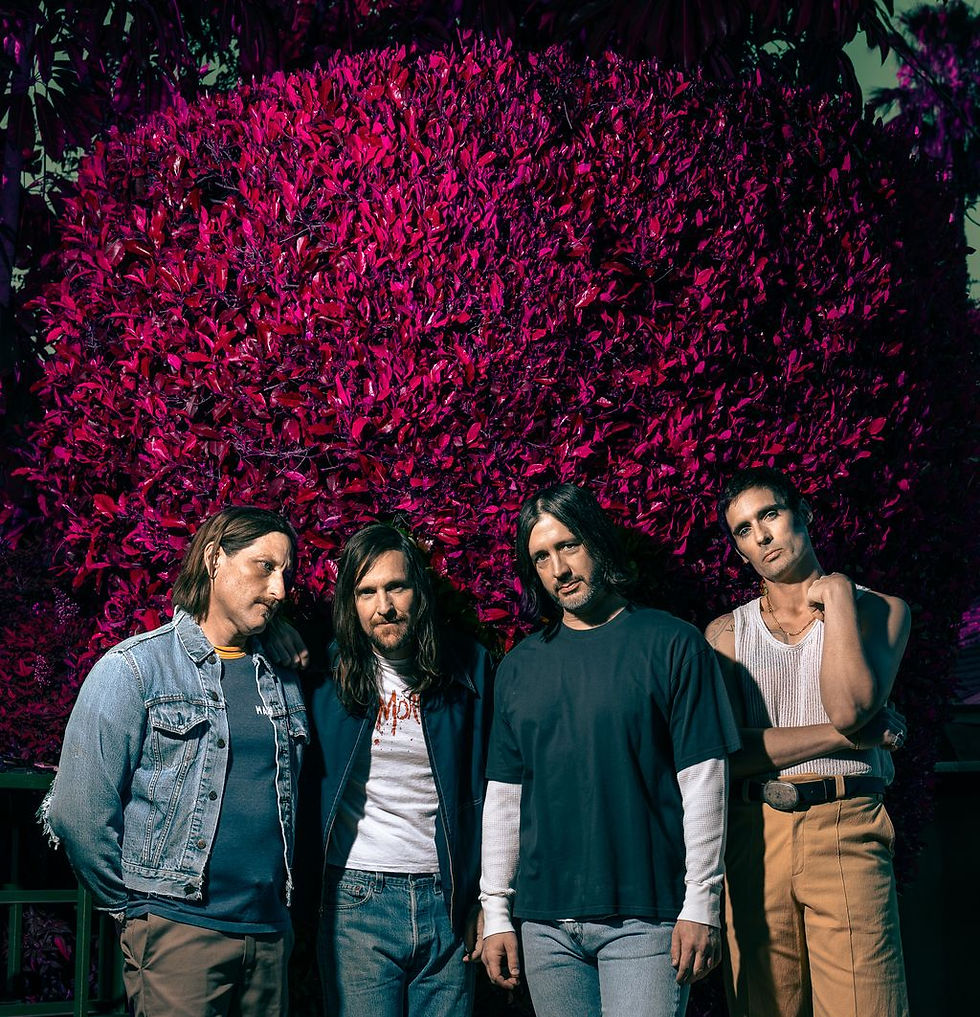
THE ALL-AMERICAN REJECTS
SANDBOX
OUT NOW
Fourteen years is a long time to leave people waiting. Since Kids in the Street landed in 2012, the world has shifted beyond recognition — pop-punk has undergone a full cultural resurrection, the emo revival has become an industry talking point, and a generation of fans who grew up shouting along to “Dirty Little Secret” and “Gives You Hell” have become adults with mortgages, complicated relationships, and significantly less patience for music that treats them like they haven’t changed. Through all of it, The All-American Rejects went quiet. Not broken, not estranged — just quiet. And now, with Sandbox, they’ve returned not with the polished, label-buffed machine of their commercial peak, but with something rawer, stranger, and arguably more honest than anything they have put their name to.
After parting ways with Interscope and spending the better part of a decade scattered across sporadic singles and well-received festival appearances, Tyson Ritter, Nick Wheeler, Mike Kennerty, and Chris Gaylor converged on something that could easily have become a cynical nostalgia play — a victory lap dressed up as new material. Instead, Sandbox is self-produced and independently released, recorded primarily at Wheelhouse Studios — Wheeler’s own hand-built facility — alongside former touring keyboardist Scott Chesak. That DIY backbone is not just a fact of logistics; it saturates every decision on this record. Nobody is telling these men what to sound like. Nobody is softening the edges or telling them their instincts are wrong. The result is an album that frequently sounds exactly as messy and human as life actually feels.
Ritter has described Sandbox as a record built around the tension between clinging to youth and being forced to stand on your own two feet as an adult — a reckoning with adulthood, with the external world, with everything that has accumulated across fourteen years of living in the gaps between albums. That ambition is not always perfectly executed, but it gives the record a genuine emotional centre that their earlier, slicker work sometimes lacked. The hook-writing instincts that built their reputation remain entirely intact. The sarcasm is still present. But something else has arrived alongside those familiar qualities: weight. Earned, specific, uncomfortable weight. And that is what makes Sandbox worth your full attention.
Easy Come, Easy Go detonates the album immediately. Ritter has described this as a purge — a track written in a state of ferocity about someone from his past who never received their proper accounting. Wheeler and Chesak built the framework from an earlier demo session that had been sitting dormant, and the track retains a propulsive urgency that makes it an ideal opener. The guitar riffs recall the band at their most direct — the kind of energy that earned them constant rotation on alternative radio in the mid-2000s — but there is a harder edge here that feels earned rather than manufactured. It announces the record without apology and without false warmth.
Get This makes an early case for the album’s thesis. Originally written as a potential gift to another artist, the hook arrived in Ritter’s head fully formed while he was dropping his son at school one morning and refused to be given away. Wheeler stripped the production back deliberately — raw performances against a driving drum loop rather than anything approaching the gloss of their major label era. There is a looseness here that was cultivated rather than corrected. The best ideas, Ritter has noted, tend to come fast, and this one arrived in minutes. It does not mean anyone any harm. It is pure fun delivered with complete conviction, and sometimes that is more than enough.
Search Party! is the album’s most ambitious early entry and one of its genuinely finest moments. Ritter describes it as a song about imbalance — the uneven playing field of love, friendship, and just existing in a world that deals its cards with no particular fairness. The emotional register shifts throughout the track like weather changing direction mid-afternoon, holding mania and depression alongside each other without forcing resolution between them. Wheeler has acknowledged the song did not immediately grab him in demo form but became one of his favourites once the studio brought it to life. The live recording that closes the album confirms it is already a song that transforms with a crowd around it.
Eggshell Tap Dancer is the first track the trio officially produced together and, appropriately, it sounds like a deliberate test of how much chaos a song can absorb and still hold its shape. The band chose to embrace the disorder rather than iron it out — including the sound of actual sirens passing the studio during the quietest section of the recording. That detail survives on the finished track, and it is exactly the kind of decision that defines what Sandbox is attempting. The outro is one of the album’s most satisfying musical stretches, arriving at something genuinely unexpected for a band with their history.
Green Isn’t Yellow strips things back to the essential. Ritter has described it as a time capsule for the experience of growing up in Oklahoma — a song about leaving home and finding the nerve to go anyway. That clarity of purpose gives the track an ease that some of the more elaborate material cannot match. The banjo Chesak brings to the arrangement is not a flourish for its own sake; it is the sound of a specific place and a formative experience rendered with precision. It breaks the album’s momentum just long enough to remind you what this band was built from and why those foundations still hold.
Sandbox is where the record earns its name. Released as the first single in April 2025, it had the considerable task of reintroducing a band after fourteen years of near-silence, and it accomplished that by refusing to be reassuring or nostalgic. The lyric sets up the image of children playing in a sandpit while bombs detonate beyond the fence — an uncomfortable collision of innocence and the brutality of the adult world. That moral tension is what gives the song its weight. This is not simply pop-punk with a dark coat of paint; it is a track genuinely wrestling with what gets normalised in wartime, and the production gives it the space to land. Ritter’s stated belief that writing music should be driven by curiosity rather than the intention of a pre-determined result has never been more apparent.
King Kong is Ritter making sense of his years in Los Angeles and the decision to leave. His own words cut to the heart of it: the city’s industry consumed his twenties and early thirties, and the track documents the relief of walking away from it. Fuelled by a hypnotic acoustic pulse that builds into a biting chorus, Wheeler’s contribution sharpens the arrangement into something undeniable. There is a satisfying contradiction at the track’s core — the swagger of pop-rock delivery carrying lyrics about retreat and self-recovery. It is cathartic and arena-ready while still carrying private weight, and it represents the band at their most commercially assured without conceding an inch of creative honesty.
Clothesline is the album’s most quietly disorienting moment. The bass intro has a jazz-adjacent looseness — almost dance-adjacent — that represents something genuinely new in the band’s sonic palette. Ritter navigates the particular misery of a relationship held in permanent suspension, the exhausting limbo of waiting for someone to either commit or walk away. The production makes unusual choices throughout, including a fade that removes the floor from under the listener rather than delivering a conventional resolution. The rhythm section carries the track with exceptional precision. It is an inventive piece of construction that announces itself quietly and then proves difficult to shake.
Lemonade carries the mood shift into something more genuinely unsettled. Fuzzy guitars and electronic textures circle a narrator who has stopped pretending he knows where he is going or whether it matters. There is a weariness in Ritter’s delivery that does not feel performed — it feels accumulated. The track builds without conventional resolution, because resolution is evidently not what this section of the record is after. It functions as a necessary emotional corridor, moving the listener toward the album’s most exposed and affecting moment.
For Mama is the album’s centrepiece and its most quietly devastating track. Ritter addresses his siblings directly, offering a kind of consolation through what sounds like the shared experience of losing their mother. The arrangement — acoustic guitar underpinned by brass from Josh Scalf and Tyler Jaeger and Ian Miller’s accordion — is stripped and carefully weighted, giving the lyrics room to land without recourse to melodrama or manufactured sweep. Ritter is writing from somewhere genuinely vulnerable here, and the production honours that by holding still rather than swelling. For Mama earns everything it asks of the listener, and it is the kind of track that reminds you what this band is capable of when they trust the song completely.
Staring Back at Me pulls the listener back from the edge. Arena-scaled in ambition, built around surging guitar lines and a keyboard melody that keeps circling back as if refusing to give up, it functions as the album’s proper emotional closure. Ritter’s vocal delivery walks a careful line between desperation and hard-won resolve, the verses tightening with each return before the outro finally opens up into something that feels like an exhale after a long period of held breath. After everything Sandbox has asked you to sit with, that release feels genuinely earned rather than simply loud.
Search Party! (Live from Medium Sized Backyard) closes the record with the roar of an actual room full of people. Recorded at one of the band’s now-legendary House Party Tour shows — performances held in backyards, gas stations, frat houses, and anywhere else that felt like a genuine event rather than a production — it provides the right coda for everything that has preceded it. After the raw intimacy of For Mama and the sustained effort of Staring Back at Me, there is something restorative about the sound of people finding each other in a room. The Crewjects — the fans who make these shows what they are — provide the backing vocals. It is Sandbox signing off as an experience rather than a product.
What is remarkable about The All-American Rejects in 2026 is that they have returned not by playing it safe but by playing it strange. Sandbox is not a record engineered for streaming playlists or designed to recapture a specific demographic. It is lopsided in places, ambitious in others, and genuinely affecting in ways that their commercial peak rarely managed. The decision to self-produce and release independently was not a fallback position; it was the entire point. Nobody made them do this on their own terms — they chose it deliberately, and the record sounds like a band that has made peace with exactly who they are.
The band that dressed as Elvis at When We Were Young and stood watching thirty thousand people sing along to album deep cuts understands something important: the audience that grew up with them has grown up too. Sandbox meets those people where they actually are — in the mess and uncertainty of adult life, still searching for music that acknowledges how difficult things are without making that difficulty the final word. They have not resolved the tension between youth and adulthood that runs through the album. They have simply agreed to live inside it.
4/5

SANDBOX – FULL TRACK LIST
Easy Come, Easy Go
Get This
Search Party!
Eggshell Tap Dancer
GreenI isn’t Yellow
Sandbox
King Kong
Clothesline
Lemonade
For Mama
Staring Back at Me
12 Search Party! (Live from Medium Sized Backyard)
FOLLOW ALL AMERICAN REJECTS
Comments