


All Music Magazine UK - Album Review - ECHO AND THE BUNNYMEN – APPLES FOR ISAAC

WORDS PAUL EVANS

ECHO AND THE BUNNYMEN – APPLES FOR ISAAC
OUT 18TH SEPTEMBER
A Return to Glory
Echo & the Bunnymen occupy a unique and enviable position in British alternative music. They are far too accomplished to be dismissed as mere survivors, yet their most celebrated work is so deeply embedded in the post-punk canon that every new album inevitably finds itself measured against Crocodiles, Heaven Up Here, Porcupine and Ocean Rain. Those records established an extraordinary musical identity: Ian McCulloch’s theatrical baritone, Will Sergeant’s atmospheric guitar, romantic fatalism, orchestral ambition and the persistent feeling that somewhere beyond the ordinary world was something darker, stranger and infinitely more beautiful.
Twelve years after Meteorites, Apples for Isaac arrives carrying that formidable history with it. At this point in their career, the easier option would have been to tour the classics, preserve the mythology and treat any new material as a bonus. Instead, The Bunnymen have returned with their thirteenth studio album, producing a record that embraces the band's familiar darkness while refusing to become trapped by its past. Apples for Isaac is not an attempt to recreate 1984. McCulloch’s description of wanting his lyrics to be “cryptically important” suggests something considerably more ambitious. Have they achieved it? The answer is an emphatic, euphoric yes.
Apples for Isaac is easily the strongest album they have released since 1987’s self-titled Echo & the Bunnymen, and it sits magnificently alongside the band's classic catalogue. This is an extraordinary statement for a band approaching its fifth decade, but this album earns it.
The best late-career records acknowledge change and incorporate it into the music. David Bowie understood this. Nick Cave has repeatedly understood it. The Rolling Stones have occasionally managed it. With Apples for Isaac Echo & the Bunnymen have achieved the same thing. The ghosts are still here. Sergeant's guitars still shimmer somewhere in the distance, and McCulloch is still searching for beauty in the darkness. Apples for Isaac feels like another fragment of their extraordinary mythology: familiar, elusive and unmistakably theirs, yet sufficiently self-contained to stand on its own. Even the title feels like a declaration of Bunnymen intent. Apples for Isaac sounds surreal, faintly biblical and slightly psychedelic, as though it has been lifted from one of McCulloch's half-remembered dreams. It suggests something ordinary rendered strange, which is perhaps the essence of the Bunnymen at their best.
Clem Burke: A Presence Felt Throughout
The album's most poignant dimension is the presence of Clem Burke. The legendary Blondie drummer and longtime friend of McCulloch performed on ten of the eleven tracks before his death in 2025 during the making of the record. Burke's contribution gives Apples for Isaac an unexpected emotional gravity. He is not simply an illustrious guest; his playing is integral to the album's character. His combination of precision, energy and movement gives the songs a physical momentum that feels particularly appropriate in the Bunnymen setting. Pete de Freitas was fundamental to the band's classic sound, providing the propulsion beneath Sergeant's guitars and McCulloch's vocals. Burke possesses a similar instinct. His drumming drives the songs rather than merely keeping time, giving the album a restless energy that repeatedly prevents it from settling into nostalgia. His death inevitably changes the way the album is heard. What might otherwise have been another late-period Bunnymen record has become a document of collaboration, transition and mortality. The band have dedicated the album to him, and his contribution can be heard as both a musical and emotional presence throughout. RIP Clem. You left an indelible mark on music.
The Songs
The album immediately establishes its intent with “Take Me by the Hand”. Disco hi-hat and thunderous bass propel the song forward with an almost glam-rock stomp, pushing Sergeant's guitar away from its customary atmospheric drift. The chorus is enormous, and when McCulloch sings, “take me by the hand before the light is gone”, it initially sounds like a straightforward love song. Yet there is something larger beneath it: a plea to his band, his audience and perhaps to time itself. There is something slightly displaced and strange about the song that only the Bunnymen could really achieve. Ian McCulloch has always possessed one of British rock's most distinctive voices, largely because he can make even the simplest phrase sound portentous. His voice has inevitably aged, but that is hardly a weakness. His greatest asset has never been technical perfection; it has been character. Crucially, there is no attempt to disguise the passing of time. Instead, McCulloch sounds as though he has finally reached the point where age itself has become another instrument and his vocals throughout are as good as ever.
“Can't Be Sold” takes a sharper turn. Built around a grinding, Porcupine-era bassline, McCulloch takes aim (Thank God the music industry still has Ian McCulloch) “You can't be sold if you can't be bought” is sardonic, self-aware and delivered with genuine bite. Musically, it occupies a strange territory somewhere between Ziggy, Aladdin Sane and Halloween Jack, filtered unmistakably through the Bunnymen's own sensibility. “Brussels Is Haunted”, is arguably the album's defining moment and their best single since “Nothing Lasts Forever”. Shimmering, delayed arpeggio guitar immediately evoke the hypnotic architecture of “The Killing Moon”, but here the sound is dirtier and less drenched in reverb. McCulloch's vocal is low, intimate and close-miked, and he sounds magnificent. There is still McCulloch menace beneath the melody, vulnerability beneath the swagger and genuine venom beneath the romance. It sounds like a future Bunnymen live classic.
The album's middle section becomes more vulnerable without sacrificing momentum. “I'll Be Your Sunshine” introduces piano and brushed drums and is notably the only track without Clem Burke, while McCulloch delivers a vocal that approaches spoken word. “The Honey” and “Unstoppable Force” form an especially effective pairing. One is tender, the other brutal. “The Honey” is propelled by an instantly memorable bassline and an almost euphoric energy, while “Unstoppable Force” surrounds McCulloch's reflections on mortality with razor-wire guitar, delay and feedback. When his voice cracks on Unstoppable Force, it matters precisely because it cracks. There is no attempt to disguise age or vulnerability; the imperfection becomes part of the performance. That has always been where Echo & the Bunnymen are at their best: somewhere between grandeur and fragility. Both songs could conceivably have appeared on Ocean Rain, yet neither feels like an exercise in recreating it. That distinction is crucial. These are songs written by the same men decades later, carrying the accumulated weight of age and experience while remaining recognisably Bunnymen.
The final stretch takes the album into darker and more experimental territory. “Lab Rats Ran” introduces saxophone, while “Asimov” feels wiry, paranoid and slightly futuristic. Its title hints towards science fiction, technology and speculative imagery, adding another dimension to an album already rich with ambiguity. The album closes with “We Prayed in the Dark”, perhaps its most archetypically Bunnymen moment. It is a prayer, but not necessarily to God. McCulloch has never been quite that straightforward. Instead, the song seems to address the darkness itself. Sergeant's guitar, a string quartet and McCulloch's weathered voice create something deeply cinematic.
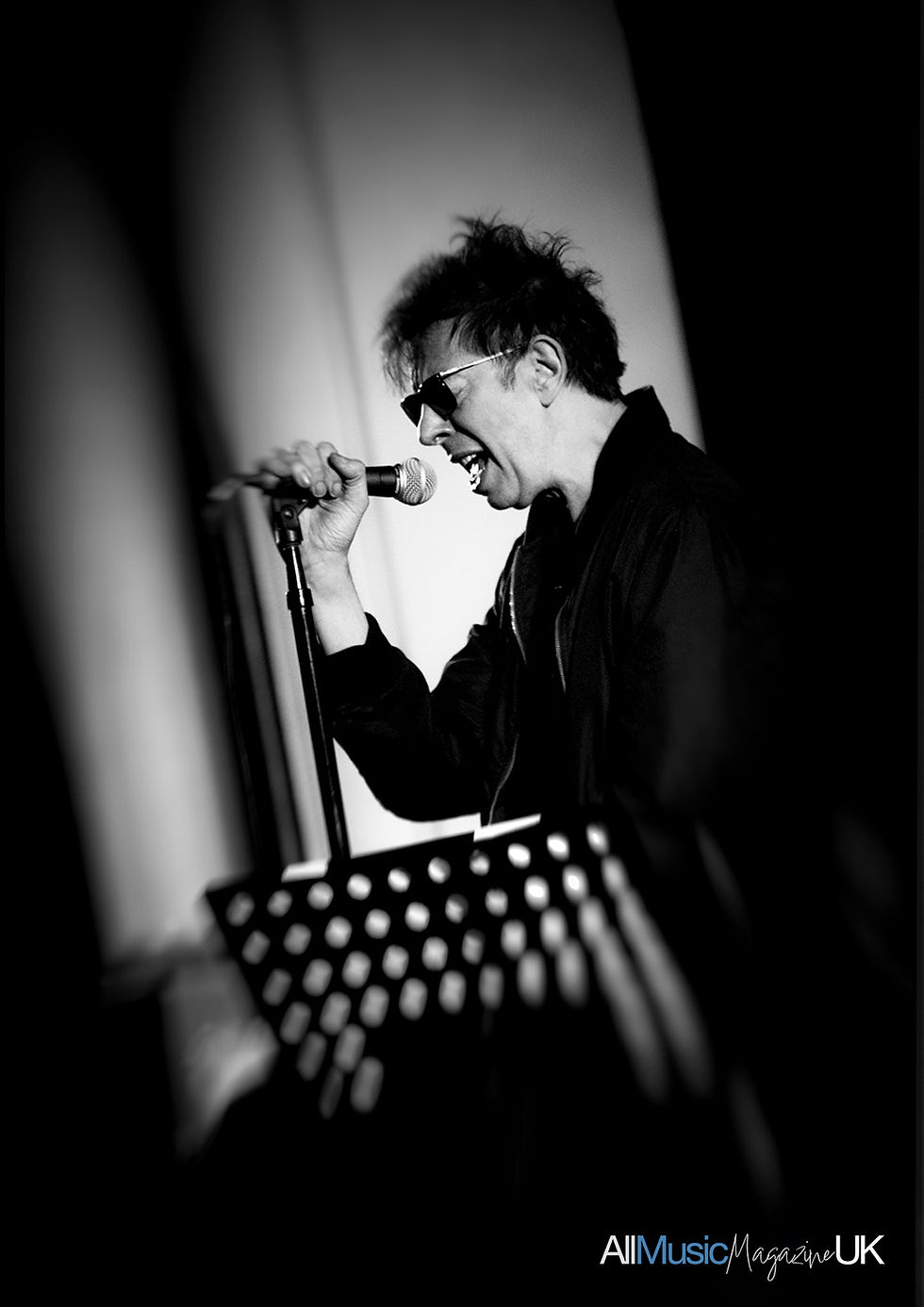
Living With the Legacy
There is a particular pressure that comes with being Echo & the Bunnymen in 2026. They are no longer simply a band. They are part of British musical mythology. McCulloch's unmistakable voice, Sergeant's glacial guitar and a catalogue that helped redefine the possibilities of post-punk have given them a legacy few bands can match. Their greatest records were adventurous because they placed familiar ingredients in unfamiliar surroundings: guitars that could be beautiful and dangerous, lyrics that were romantic yet elusive, and arrangements that were grand without ever becoming comfortable. That tension remains central to Apples for Isaac.
With Echo and the Bunnymen there has always been swagger beneath the melancholy, humour beneath the grandeur, sexuality beneath the poetry and Liverpool beneath the European art-rock mythology. The Bunnymen could be pretentious and gloriously unpretentious, grandiose and scruffy, romantic and sarcastic, sometimes within the same song. Most importantly, they understand atmosphere. Their music creates landscapes rather than simply accompanying songs. It allows romance, menace, melancholy and swagger to occupy the same space. Their history has now become almost impossibly large. “The Killing Moon”, “The Cutter”, “Ocean Rain”, “Seven Seas”, “Bring on the Dancing Horses” and “Lips Like Sugar” are not simply songs in a back catalogue; they are cultural reference points. Every new Bunnymen recording inevitably exists in their shadow, but great artists do not attempt to escape their history. They absorb it, reshape it and carry it forward. That is exactly what Apples for Isaac does, and it does it magnificently.
This is not simply a band returning after twelve years. It is a band confronting age, mortality and memory. McCulloch is writing and singing from a perspective vastly removed from the one he inhabited when “The Cutter” and “The Killing Moon” were created. Sergeant's guitar carries almost five decades of accumulated experience. Burke's contribution has acquired an unexpected poignancy. Yet none of that history feels like a burden. Apples for Isaac is familiar but elusive, nostalgic without being backward-looking and atmospheric without becoming complacent. It understands that simply repeating the past would be artistically pointless. It doesn't need to be Ocean Rain again. Nothing could be. It doesn't need to compete with “The Killing Moon”, “The Cutter” or “Lips Like Sugar”. These songs already belong to history. What Apples for Isaac achieves is considerably harder: It proves that Echo & the Bunnymen still belong to the present. The ghosts are still there, but they are making new music.
Apples for Isaac is Echo & the Bunnymen in 2026: older, wiser, more vulnerable, occasionally darker and still gloriously haunted. Apples for Isaac is a magnificent late-period statement, but more than that, it is a monumental return. Not because the band have gone back to the past, but because they have discovered how to carry that past forward without becoming imprisoned by it. Echo & the Bunnymen have produced an album that honours their legacy without simply replaying it. More remarkably, it is an album that can sit proudly alongside Ocean Rain, Echo & the Bunnymen, Crocodiles, Heaven Up Here and Porcupine without feeling diminished by their presence. And, for the first time in a long time, there is genuine excitement about what comes next from one of the UK's most legendary and influential bands. Thank God for the Bunnymen in 2026. Outstanding.
9/10
Apples for Isaac is released on 18 September 2026 via Jacaranda Records.

TRACK LISTING
Take Me by the Hand
Can't Be Sold
Brussels Is Haunted
I'll Be Your Sunshine
Hijacked
The Honey
Unstoppable Force
The Light That Surrounds You
Lab Rats Ran
Asimov
We Prayed in the Dark
FOLLOW ECHO AND THE BUNNYMEN
Comments